1st Grade Readiness Checklist: Preparing Your Child for School 2026
reviewed by Laila A. Lico
Updated on August 20, 2026
Key Points: Getting ready for first grade means kids are about to dive deeper into books, new math adventures, and friendships that will make school even more fun. A 1st grade readiness checklist gives parents a simple way to see what their child should know before the big move. So, let’s take a look together. Before 1st grade, a child should know basic letters, numbers, shapes, and colors, follow simple directions, and recognize their name in print. They should also be able to express needs clearly, play with others, and focus on short tasks. These school readiness skills make the start smoother and more enjoyable. Here’s Brighterly’s 1st grade readiness checklist to help you see which skills children usually need before starting first grade.
Build strong math foundations for first grade success
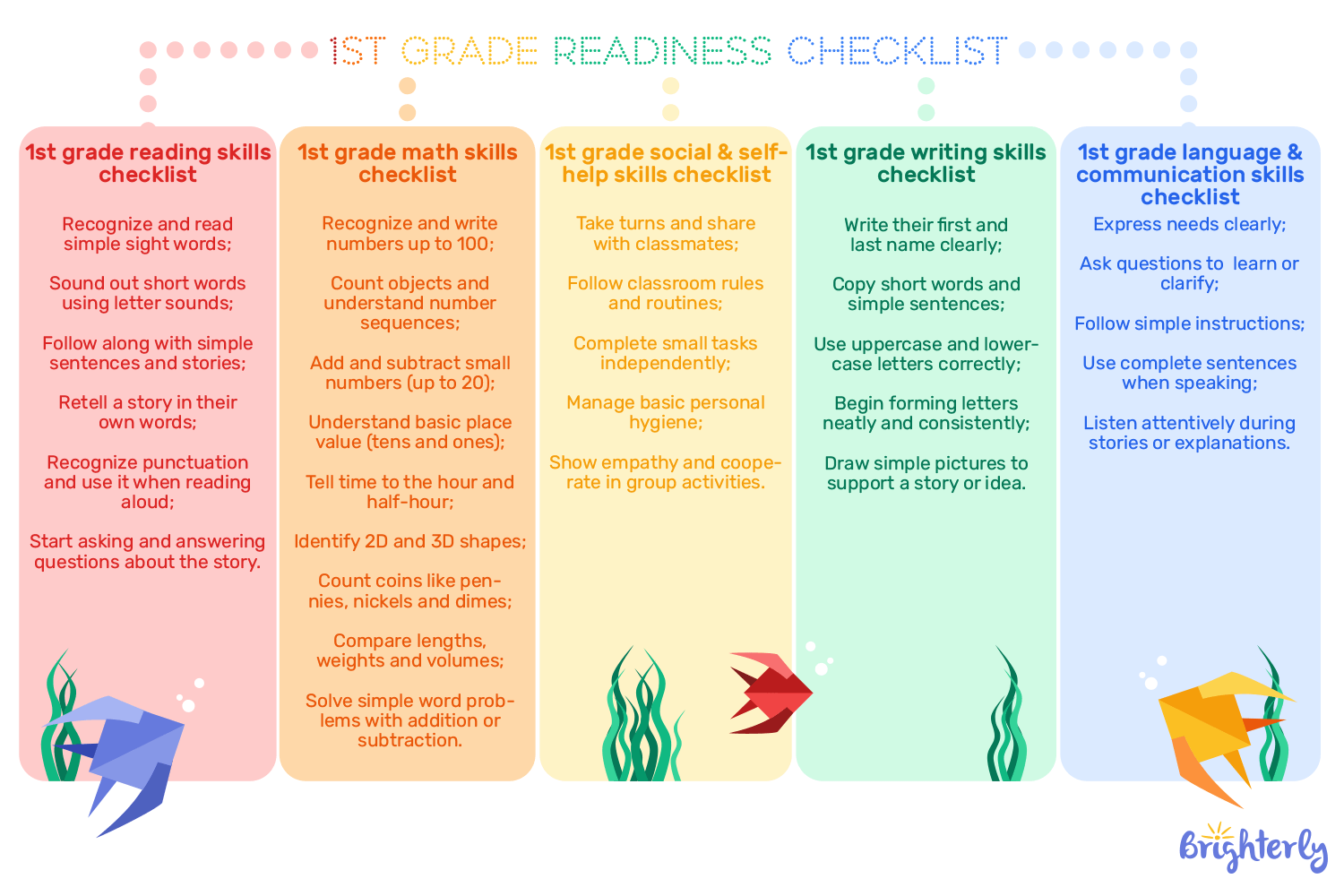
Brighterly helps kids practice counting, shapes, time, and simple problem-solving Explore Brighterly Learning Experience Learn exactly how Brighterly helps students thrive through expert sessions, online tools, and proven feedback from thousands of satisfied parents To enter first grade feeling confident and enjoying school, your kid has to be ready to explore, play, and learn with curiosity. To achieve that, you can hang up or show your child this free 1st grade readiness checklist, and turn learning into a little adventure by letting them complete skills or mini-tasks to earn stickers or rewards. Kids love racing to check off each step, and it turns practice into a playful game instead of a chore! “Through conversation with parents, children build skills of back-and-forth social interaction” Note: Using a 1st grade math test can help you see which skills your child already knows and which ones might need a little more practice. Getting comfortable with numbers and simple math ideas is a key part of first grade. At Brighterly, we offer personalized math lessons for first graders and have 1st grade math worksheets for additional support. Math worksheets make practicing addition, subtraction, counting, shapes, time, and money fun and easy. Your kids can do a little at a time and enjoy small successes. Short daily practice sessions help children feel ready and excited for math. Note: Brighterly is a K-12 school-supplemental learning platform employs a foundation-first approach, helping kids master math and reading with personalized 1:1 teaching fully aligned with the US state standards. With our 1st grade skills checklist for math, learning can turn into a fun little adventure. Kids can count snack crackers, sort toys by color, or make patterns with blocks. You also may use 1st grade readiness assessment worksheets to make tracking progress simple. They cover reading, math, and thinking skills, giving you a clear picture of what your child knows and what to practice a bit more. Using these worksheets regularly can make learning feel like playtime and get your child ready to shine in first grade. You can also book a free lesson in math for 1st graders. By first grade, kids are usually ready to read short stories and simple passages with confidence. A first grade ready checklist is free to use to help you see which skills to focus on, like recognizing sight words, sounding out short words, and reading sentences from left to right. They should also start reading aloud with expression, noticing punctuation, and understanding the basic meaning of the story. Little daily activities at home can make a big difference. Reading together, counting toys or snacks, or talking about a short story can turn learning into a game. The goal is to make your child feel proud and excited to start first grade. Note: According to the National Center for Education Statistics, kids who build strong early literacy skills and math foundations are more likely to do well in later grades. First graders can often retell a story in their own words, answer simple questions about what happened, and connect the story to things they know in real life. A 1st grade reading test can show which skills your child has already mastered and which ones might need a little extra attention, helping make reading fun and encouraging. Reading in first grade is more than just recognizing words — it’s about understanding stories and enjoying them. 1st grade reading worksheets help kids practice key skills like recognizing common sight words, sounding out short words, following simple sentences, and answering questions about what they read. These exercises also build comprehension, helping children retell stories in their own words and notice important details. Reading can be exciting when children feel confident and proud of what they learn. Our reading lessons for 1st grade help children enjoy reading and feel proud of their progress. They guide kids through simple steps like recognizing words, sounding out letters, reading short stories, and answering questions about what they read. Learning becomes relaxed and playful, helping children feel more confident and curious. Note: According to Scholastic, reading provides a path for lifelong learning, expands our worldview, and fosters empathy for people with different perspectives and experiences than our own. At Brighterly, we make reading clear, fun, and supportive for first graders. Your kid can take small steps at their own pace and celebrate each success. You can book free demo lesson to see how our tutors can make reading fun and rewarding.
Help your child love reading with Brighterly
Easy and fun ways to read sight words and short sentences. Daily practice, even just 10–15 minutes, makes a big difference. Worksheets guide kids step by step, turning reading into a fun and rewarding routine. With regular practice, your child gains confidence, reads more smoothly, and starts loving books while developing essential skills for first grade success. Helping your child practice literacy skills like recognizing letters and sounds, reading sight words, and writing simple sentences gives them a strong foundation for first grade and builds confidence in reading and writing. What should a child entering first grade know in writing? Writing is an important skill for first graders, helping them express ideas clearly. How can you help? Try to make practicing letters, words, and sentences fun and manageable. Kids can take small steps each day, building neat handwriting and confidence. These activities make writing feel playful, encouraging pride in their progress. Strong communication skills help children express needs and understand instructions. Every day, language activities turn listening, speaking, and following directions into fun daily routines. Kids gain confidence by practicing simple conversations and asking questions. Parents can practice language skills in playful ways, like answering story questions or giving mini-presentations, boosting confidence and independence. This checklist can help you find out is your child ready for first grade learning or not. Social and self-help skills imply taking turns, following routines, completing small tasks independently, and ultimately feeling confident in school. These skills make daily classroom life smoother and more enjoyable. Also, you can do a first grade expectations checklist yourself to track your child’s progress and make learning daily skills fun and manageable. Note: “Social and emotional development, approaches to learning, and physical health and development.” — A Review of School Readiness Practices in the States If you prefer having a handy version you can print and check off, Brighterly’s 1st grade readiness checklist makes it easy. It’s colorful, simple, and perfect for keeping track without any stress. Using the checklist can also turn learning into fun little daily routines. Parents can read together, practice counting, or explore short stories and simple math problems. With this first grade readiness checklist PDF, you’ll have a clear guide to support your child’s learning and help them feel ready, confident, and excited for first grade. Math Literacy Writing Count grapes (or cereal pieces) during snacks; do simple addition and subtraction by adding more pieces or eating a few. When driving or walking, find familiar sight words or letters on stop signs and billboards. Go outside and practice forming upper- and lowercase letters; draw simple pictures with sidewalk chalk. In the house or neighborhood, look for 2D and 3D shapes (rectangular doors, sphere-shaped balls, etc.). After reading a bedtime book together, ask your kid to explain their favorite part of the story in their own words. Spread shaving or whipped cream on a baking sheet and let your child trace letters with their finger. Together sort some change into separate piles of pennies, nickels, and dimes. Create a simple bingo card filled with common sight words and cover them with small buttons when reading them aloud. Draw letters with a stick in sand at the park; trace letters in the air with a finger (guessing the message). For professional 1:1 support, consider Brighterly with its personalized math and reading tutoring to enhance your child’s confidence and skills for the upcoming school year. 🔴 If your child… ➡️ Fix with… Skips numbers (counting to 20) or can’t recognize double-digit numbers Point out numbers in the real world: read house numbers during walks or count the stairs, climbing them together. Confused by basic shapes or can’t tell the difference between a flat shape and a solid object Make cleanup fun: ask them to find all the cylinder-shaped cans in the pantry or group toys by their physical shapes. 🔴 If your child… ➡️ Fix with… Has trouble sounding out very simple three-letter words Play with rhyming games: e.g., say a word like ‘hop’ and take turns guessing words that match the sound – it’ll help build phonetic awareness. Can’t memorize or recognize basic sight words after seeing them often Write these words on sticky notes and place them around the house. Have your child do a ‘high-five’ to the note and read the word aloud when they pass by it. “First-grade teachers know that children arrive with a wide range of abilities and developmental timelines, and they are prepared to meet them where they are.” 🔴 If your child… ➡️ Fix with… Leaves out letters or often confuses uppercase and lowercase letters For building muscle memory, have them trace letters in a tray of salt or sand, while naming the letter out loud. Struggles to hold a pencil firmly or their hand cramps Squeeze playdough, thread beads onto yarn, use kitchen tongs to move small toys, etc. – it all does wonders for fine motor skills. 🔴 If your child… ➡️ Fix with… Becomes upset when asked to share toys or take turns during playdates Play simple board games or take turns adding blocks to a single tower. Relies entirely on you to open lunch container lids, put on shoes, etc. Give them a manageable task like putting their own shoes in the closet or clearing their plate after breakfast. During the year, 1st graders generally shift from recognition (knowing what a letter or number is) to application (using those letters to write stories or using those numbers to tell time). It’s an extremely important growth year – that’s why getting ready for 1st grade beforehand makes the following granular development smoother. Skill Things 1st Graders Should Know Before Starting School By the End of 1st Grade Math Reading and Phonics Readiness Writing Social-Emotional Skills and Independence In the US, kids usually start first grade at 6 years old, although it depends on their birth date and local school district rules. Most states and school districts establish a cut-off date (often September 1st or October 1st), and if your child turns 6 before the cut-off, they’ll almost always enter first grade that fall. If your child successfully completed a kindergarten program and their teacher hasn’t raised flags about developmental delays, they’re highly likely ready for the first grade. Plus, you can be confident your kid’s prepared for the transition if they perform consistently in academic foundations, social and emotional maturity, initial independence, and self-help skills. Absolutely, yes. The first grade skills checklist is simply a roadmap, and teachers are experts at meeting children right where they are. During the first 4-6 weeks of the school year, they review kindergarten concepts to ensure everyone has mastered the basics. On your part, ensure your kid can communicate their physical needs, follow simple directions, and willing to try new tasks. Kindergarten teaches kids how to be a student. First grade builds on that foundation, using those student skills to delve into real academic learning. The daily rhythm changes from a play-based environment to an academic one in many aspects: If ABCmouse no longer fits your child’s level, Brighterly offers live 1:1 tutoring support that adjusts to their current learning needs. This guide shows all the ABCmouse alternatives in 2026 you can try for a more structured curriculum, learning needs, or for free. Best ABCmouse Alternatives at a Glance *Pricing information verified as of September […] Oct 08, 2025 ⭐️ Overall rating: 7/10 If your child’s school is partnering with Ignite Reading, this review has compiled parent and tutor feedback on its learning approach, interface, effectiveness, customer support, and pricing to help you see what to expect from this reading tutoring program. If you’re looking for a more personalized online tutoring alternative, you can […] Oct 09, 2025
What Should a Kid Know Before 1st Grade?
1st Grade Readiness Checklist


1st Grade Math Skills Checklist
How to Practice Math Skills at Home Before First Grade
1st Grade Reading Skills Checklist
What Should a 1st Grader Be Able to Read?
How to Build Reading Skills Before First Grade
1st Grade Writing Skills Checklist
1st Grade Language & Communication Skills Checklist
1st Grade Social & Self-Help Skills Checklist
First Grade Readiness Checklist PDF
How to Use This Checklist at Home
Signs Your Child May Need More Practice Before First Grade
Math
Reading and Decoding

Writing and Motor Skills
Social and Self-Help Skills
What Do 1st Graders Learn During the Year?
Frequently Asked Questions
At What Age Do Children Typically Start 1st Grade?
How Do I Know If My Child Is Ready for First Grade?
Can a Child Start 1st Grade Without Meeting Every Checklist Skill?
How Can Parents Support 1st Grade Readiness at Home?
What Is the Difference Between Kindergarten and First Grade Expectations?
How Do I Assess My Child’s Skills Before School Starts?



Math & reading from 1st to 12th grade
Looking for homework support for your child?
Choose kid's grade

Math & Reading for Grades 1–12
Build real confidence for your child with a Brighterly math or reading tutor.