Debate Topics for Kids: 80+ Easy and Thought-Provoking Ideas by Grade
reviewed by Franz Jerby Delos Santos
Updated on July 23, 2026
Key Points
- The best debate questions are understandable, relatable, and age-appropriate.
- Good debate topics for young kids use everyday situations, focus on family and school, and require simple argumentation.
- Effective debate questions for older children can be more controversial, require a social standing, and concern hot issues.
- Running a successful debate with kids requires a good topic, two different sides, and simple ground rules.
- To help your child become a top debater, teach them how to research a topic, let them practice both sides of the issue, and make debating sessions fun.
Debates help children develop critical thinking and public speaking skills, but finding the right debate topics for kids is not always easy. This guide gives you 80+ ideas to hold productive, engaging discussions at home or school – sorted by grade. Choose questions that match your child’s grade, knowledge, and interests.
What Are Debate Topics for Kids?
Debate topics for kids are structured, targeted questions or statements that encourage children to express opinions, think critically, and discuss different viewpoints (pro or against). Choosing age-appropriate debate questions for kids matters because it makes discussions engaging and understandable. Building a strong argument also leans on skills kids strengthen through ELA tutoring — reading closely, organizing ideas, and explaining a position clearly. Good topics for debates:
- Have two clear sides.
- Use age-appropriate language.
- Focus on topics relatable to kids.
Sandro Kratz, Founder of Tutorbase, explains what makes for the best questions a home or classroom debate:
“The best debate topics for kids are the ones they actually care about but don't start fights over.”


Explore Brighterly Learning Experience
Learn exactly how Brighterly helps students thrive through expert sessions, online tools, and proven feedback from thousands of satisfied parents
Debate Topics for Kids in Preschool
Preschool kids respond best to easy debate topics about their daily routine, favorite things, and basic choices. Questions need to be relatable, concrete, and playful to encourage participation and develop passion for debates in the future.
- Is ice cream better than cake?
- Are pets better than toys?
- Should kids go to bed early or late?
- Is playing outside better than watching TV?
- Should we share toys with friends?
- Is it better to play in the morning or in the evening?
- Should kids help their parents at home?
- Is it more fun to draw or to sing?
- Are cartoons better than books?
- Should kids be asked to clear up their toys after playing?
- Is it better to have a dog or a cat?
- Should kids eat vegetables every day?
- Is it good to have younger siblings?
- Should kids spend more time with mom or dad?
- Should grandparents take care of their grandchildren?
- Is playing alone or with friends more fun?
- Should you be able to wear pajamas to school?
These school, pet, and family debate topics for small kids work well as they are light, engaging, and entertaining, helping your child practice speaking, listening, and taking turns without feeling overwhelmed.
Easy Debate Topics for Kids (Elementary School)
Elementary debate topics are straightforward, real-world, and slightly more thought-provoking than preschool ideas. Elementary school students can explain opinions and listen to others, and topics should connect to school, friendship, and daily decisions.
- Should homework be banned?
- Is recess the best part of a student’s day?
- Should students wear school uniforms?
- Is it better to have many friends or a few close ones?
- Should studying math be obligatory?
- Should kids have chores at home?
- Are group projects better than working alone?
- Should every child play a sport?
- Is it better to learn online or in a classroom?
- Should kids be paid for doing chores?
- Should summer reading lists be banned?
- Is game-based learning helpful?
- Should kids be allowed to bring toys to school?
- Are video games good for learning?
- Is it better to finish homework right after school or later?
- Should school days be shorter?
- Should kids have unlimited screen time?
These debate questions work well for K-5 kids as they ask them to share their opinions on familiar topics that matter to them while practicing reasoning and respectful discussion.
Note: Building debate skills starts with solid reading comprehension and critical thinking skills, like the ones the Brighterly learning platform builds 1:1, personalized support in math and reading. Our K-12 reading program can help your child develop the comprehension, fluency, vocabulary, and analytics skills they need to build clear arguments, express clear ideas, and participate confidently in debates.
Build strong skills for debate readiness!
Brighterly tutors prepare an individualized plan to develop the skills your child needs.


Good Debate Topics for Kids in Middle School
Middle school kids debate topics should be more challenging and provocative while still associated with everyday life. At 6-8 grade, students can handle multiple perspectives, support arguments with reason, and engage in respectful disagreements.
- Is homework helpful or unnecessary?
- Should social media have age restrictions?
- Are video games beneficial or harmful?
- Should junk food be banned at school?
- Are age grades an accurate measure of learning?
- Should schools assign homework for the weekend?
- Is peer pressure always negative?
- Are extracurricular activities as important as academic subjects?
- Should we ban plastic bags?
- Should schools allow students to use AI for homework?
- Should mobile phones be banned at school?
- Are zoos ethical?
- Should parents be able to control their kids’ access to mobile phones?
- Are influencers good role models for teens?
- Should students be allowed to choose their own subjects at school?
- Should schools provide free lunch for everyone?
These topics fit middle school students as they provoke deeper thinking, allowing students to explore real-world issues and develop reasoning and speaking capabilities.
Funny Debate Topics for Kids
Funny debate questions make discussions low-pressure, engaging, and enjoyable. Silly and imaginative questions help children of all ages participate without fear of being wrong.
- Is it better to have a pet dinosaur or a pet dragon?
- Are socks better than shoes?
- Is it better to be super strong or super fast?
- Would you rather speak every human language or be able to talk to animals?
- Should pizza have pineapple on it?
- Would you rather eat only ice cream or only cheese for the rest of your life?
- Are cats smarter than dogs?
- Should weekends be longer than weekdays?
- Would you rather live on the Sun or on the Moon?
- Is it better to have a human teacher or a robot teacher?
- Would you rather have wings or a tail?
- Is it better to be a superhero or a wizard?
- Would you rather have 10 siblings or no siblings?
- Should school be held on Mars?
- Would you rather be invisible or able to read minds?
- Is it better to be the funniest person or the smartest person?
- Should kids be allowed to have dessert after every meal?
Debate Topics for High School Students
Opinion questions for kids in high school should encourage deeper analysis and well-supported arguments. Students in grades 9-12 can evaluate multiple perspectives, use examples, and engage in real-life issues.
- Should college education be free?
- Should fast fashion be banned?
- Is artificial intelligence threatening jobs?
- Should voting be mandatory?
- Should animal testing be banned?
- Is climate change the most acute global issue?
- Should freedom of speech apply to the internet?
- Should schools teach more life skills and less academics?
- Should education be compulsory?
- Is competition or collaboration more beneficial?
- Should the government regulate big tech companies?
- Is space exploration worth the investment?
- Should governments provide a universal basic income?
- Should the voting age be lowered?
- Should students be required to do community work?
- Is remote work the future of employment?
- Should standardized testing be eliminated?
The more controversial topics for kids in high school challenge them to think critically, use evidence, and build logical arguments.
How Debates Help Kids
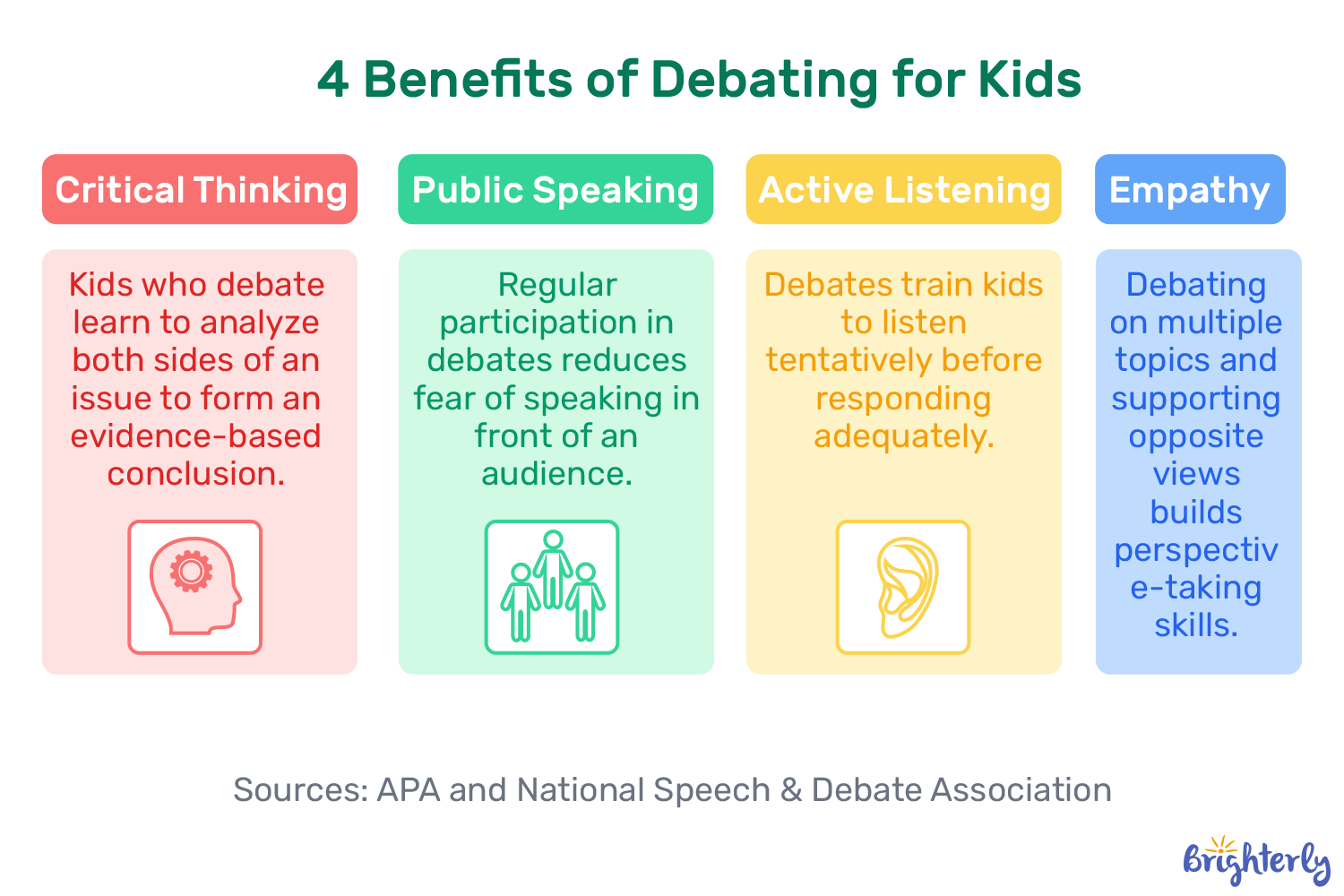
Debates help kids build skills that go well beyond winning an argument. Debating enhances critical thinking, problem-solving, and reasoning through the need to build structured arguments. Practice eliminates the fear of public speaking and turns kids into active listeners. Hearing others’ perspectives also develops social skills for kids like empathy and open-mindedness.
Critical Thinking and Reasoning
Debating develops critical thinking and reasoning by requiring kids to analyze information, evaluate evidence, and form logical arguments. 2025 research by the American Psychological Association (APA) shows that conducting debates in especially safe learning environment build critical thinking and problem-solving abilities as students explore different perspectives and justify their ideas. The skills support academic performance and prepare students for real-world challenges.
Public Speaking Confidence
Practicing debate topic ideas reduces public speaking anxiety by giving your child regular opportunities to present ideas clearly in front of increasingly larger audiences. A 2025 study “Analysis of constant participation in public speaking and debate can conquer fear and gain confidence” published in Environment and Social Psychology concludes that intensive public speaking experiences – like debates – contribute to developing confidence through practice, emotional regulation, and consistency.
Active Listening Skills
Debates strengthen active listening skills – crucial for academic success and beyond – by requiring students to focus on others’ arguments, understand diverse viewpoints, and respond thoughtfully and logically. Instead of just waiting for their turn to speak, kids learn to listen with purpose and build relevant responses. Being an active listener improves classroom participation, teamwork, and overall communication skills.
Empathy and Perspective-Taking
Debating helps develop empathy and perspective-thinking by asking children to argue on both sides of a debate topic for kids. Understanding the views of your opposing side encourages open-mindedness and a deeper appreciation of opinions different from your own. As highlighted by the APA in 2025, participating in a structured debate improves respect for others and even inspires taking a stance on important social and everyday issues.
How to Run a Simple Debate with Kids
Running a debate with kids doesn’t require special equipment, just a good topic to debate about, two teams, and some basic ground rules. With a basic structure, parents and teachers can turn any discussion into a fun, skill-building activity (including a last day of school activity).
Choose a Topic from This List
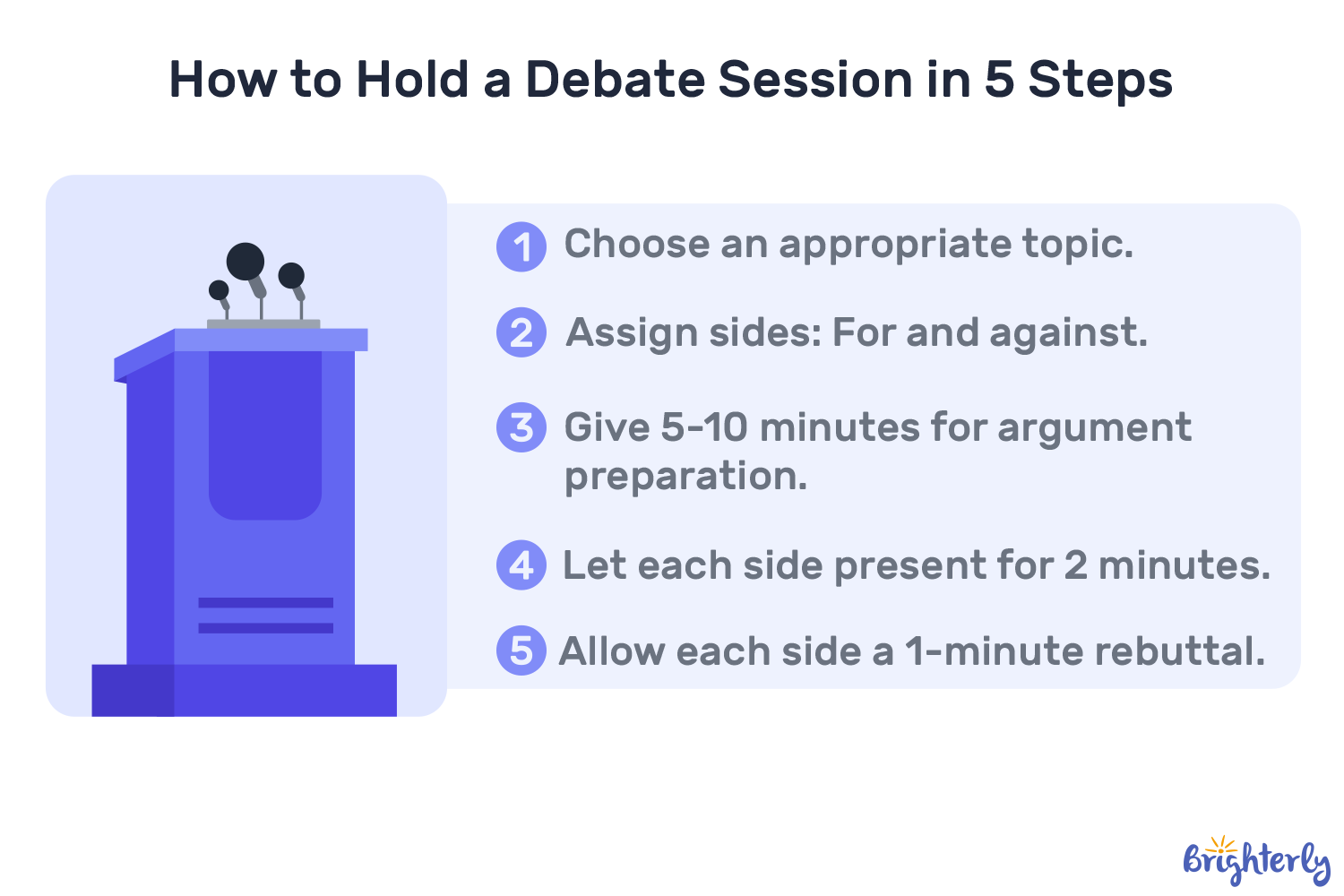
Pick a topic debate for students that matches your child’s grade, maturity, and interests. Age-appropriate topics boost engagement by making it more compelling to express opinions. Aja Chavez, Executive Director of Mission Prep Healthcare, explains how to select the best topics for a productive debate:
“Picking debate topics for kids is a balancing act.”

Divide into Two Sides
Split participants into two groups. It’s better to assign sides to ensure balance and avoid clashes. For older students, you can allow them to choose sides to encourage more active participation.
Give Each Side 5-10 Minutes to Prepare Their Argument
Allow debaters time to think through ideas and organize arguments. Younger kids can brainstorm together, while older students can jot down key points. Clearly state how much time children have to prepare.
Each Side Presents for 2 Minutes
Have one side speak uninterruptedly for 2 minutes to show their point of view and support it with evidence. The other side needs to listen actively to demonstrate respect for the speakers and to be able to respond adequately. This practice develops social skills and creates a positive learning environment.
Allow a 1-minute Rebuttal Each
Provide each side with 1 minute to respond briefly to the other’s points. Conclude with a group discussion to reflect on both sides of the topic and the arguments which the two groups used. Suggest ways to improve next time.
Note: Adjust the timing of each part of the debate based on age. Smaller kids need shorter sections to stay focused, while older ones require more time to prepare more complex perspectives.
Tips for Parents: How to Help Your Child Prepare for a Debate
These six practical strategies help your child walk into any debate feeling prepared:
- Start with research: Help your child look up 2-3 facts or examples related to the debate topic for kids. Encourage them to understand the big ideas, not only memorize them.
- Practice both sides of the argument: Ask your child to think about the two perspectives on the question and come up with viable responses on both. The strategy enhances your kid’s critical thinking and prepares them for rebuttals.
- Use short practice rounds: Hold a mock debate at home with timed turns. Your child will learn how to organize their thoughts in a limited time and develop a feel of how long they have to speak for.
- Build a clear speaking structure: Teach your child to start with a main point, add a reason, and give an example. Simple structure makes arguments easier to follow and more persuasive.
- Help manage nerves: Remind your child that it is OK to make mistakes and show them how to learn from mistakes. Suggest deep breaths and focus on sharing ideas rather than winning.
- Keep debating fun: Choose engaging and fun debate topics for kids and celebrate effort, not just performance. A positive experience builds long-term confidence.
Strong debate skills rely on clear thinking, comprehension, and the ability to structure ideas. The Brighterly reading comprehension program can support these foundations by helping your child develop problem-solving, persuasive speech, and logical reasoning. Our tutors personalize instruction and gamify practice for more engaging learning.
1:1 tutoring for critical thinking & reasoning skills!
Help your child gain the skills for winning debates in a fun way.
Conclusion
Choosing the right debate topics for kids by age and interests helps them think critically, communicate clearly, and build confidence. Start with simple, engaging everyday questions, follow a basic structure, and adjust difficulty as your child’s skills grow. With consistent practice and parent support, your kid can turn discussions into valuable learning opportunities.
Frequently Asked Questions
What Is a Good Debate Topic?
Good debate topics for kids are engaging, easy to understand, and open to multiple viewpoints. The most effective examples relate to everyday experiences (such as family, friends, and school) and encourage students to explain their thinking and support it with arguments. Well-designed questions promote discussion, curiosity, and the ability to consider different perspectives.
What Are Some Good Debate Topics for 3rd Graders?
Good topics for 3rd grade students are simple, fun, and connected to everyday situations. Examples include whether homework should be shorter, if recess should be longer, or if pets are better than toys. The best questions are easy to comprehend, allow for two clear viewpoints, and encourage sharing opinions.
How Do You Teach a Child to Debate?
To teach your child how to debate, start with a simple, interesting topic and model how to share an opinion with clear reasoning and specific examples. Practice timed, structured rounds where your kid speaks, listens, and responds. Encourage respectful discussion, ask follow-up questions, and gradually introduce a counterargument as confidence and thinking skills grow.
How Long Should a Kids’ Debate Be?
A kids’ debate should last 15-20 minutes, depending on age and experience, with short speaking turns to maintain focus. In 2022, Edutopia suggested a debate format that includes introduction (3 minutes), arguments (3 minutes/team/round), rebuttals (3 minutes/team), and closing statements (3 minutes/team), with some time allocated to preparation too.
What Makes a Debate Topic Age-Appropriate?
A debate topic is age-appropriate when it matches the child’s language level, knowledge, and emotional maturity. The best debate subjects use familiar situations and simple wording for young learners, while older students can handle more complex issues that require complicated vocabulary and knowledge. Well-selected questions keep children engaged without causing confusion or frustration.
How Can I Help My Child Prepare for a Debate?
To help your little one prepare for a debate, show them how to gather a few key facts, organize ideas into a clear point-reason-example structure, and practice short speaking rounds at home. Ask your child to consider both sides of a topic and prepare simple responses. Keep practice stress-free, focus on effort, and build confidence through repetition and constructive feedback.
What Is the Difference Between a Debate and an Argument?
A debate is a structured, timed, and respectful discussion where participants take turns speaking. Debaters present different (usually opposing) viewpoints using facts and reasoning. An argument, on the other hand, is an unstructured, untimed, and emotional exchange that focuses on winning rather than understanding and explaining. Using good debate topics for kids can help turn disagreements into productive conversations.


If you wonder “What is subitizing?”, it’s a skill of recognizing the exact number of objects in a small group at a glance. For children, these skills are one of the blocks that shape their number sense and early math skills. The development of subitizing allows kids to be more confident and better at mental […]

May 10, 2026
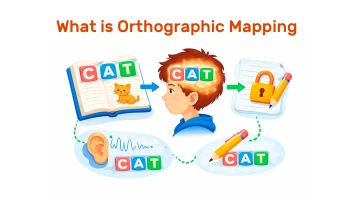
Orthographic mapping is a cognitive process that turns sounds and unfamiliar letters into instantly recognizable words with meaning. Find out how this process works, when it starts in children, and what activities you can try to support your child when they are going through this mental development stage, essential for overall literacy. What Is Orthographic […]
May 10, 2026
Math & reading from 1st to 12th grade
Looking for homework support for your child?

Choose kid's grade

Math & Reading for Grades 1–12
Build real confidence for your child with a Brighterly math or reading tutor.