Back to School Tips to Help Your Child Start the Year Strong
reviewed by Jo-ann Caballes
Updated on September 2, 2026

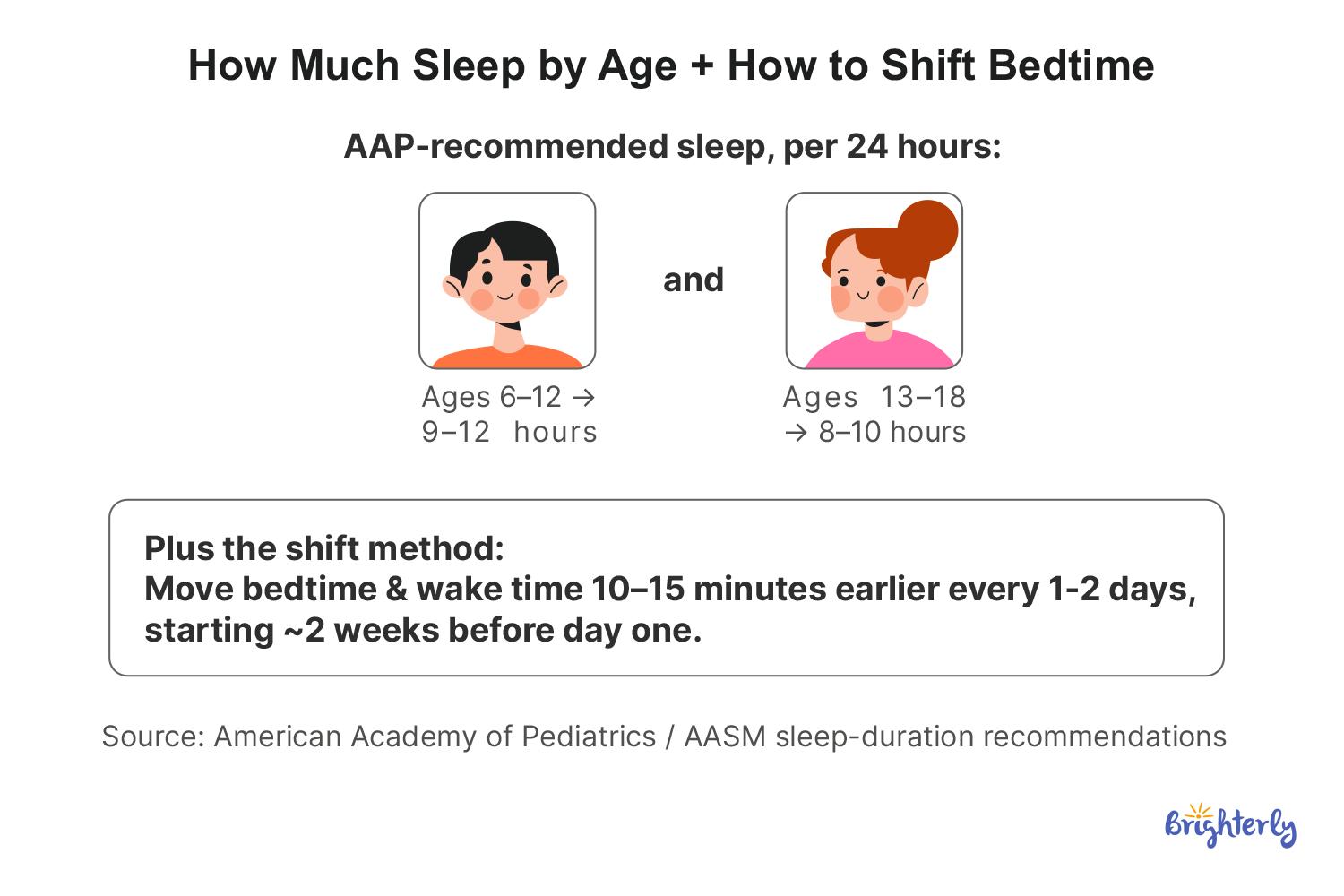
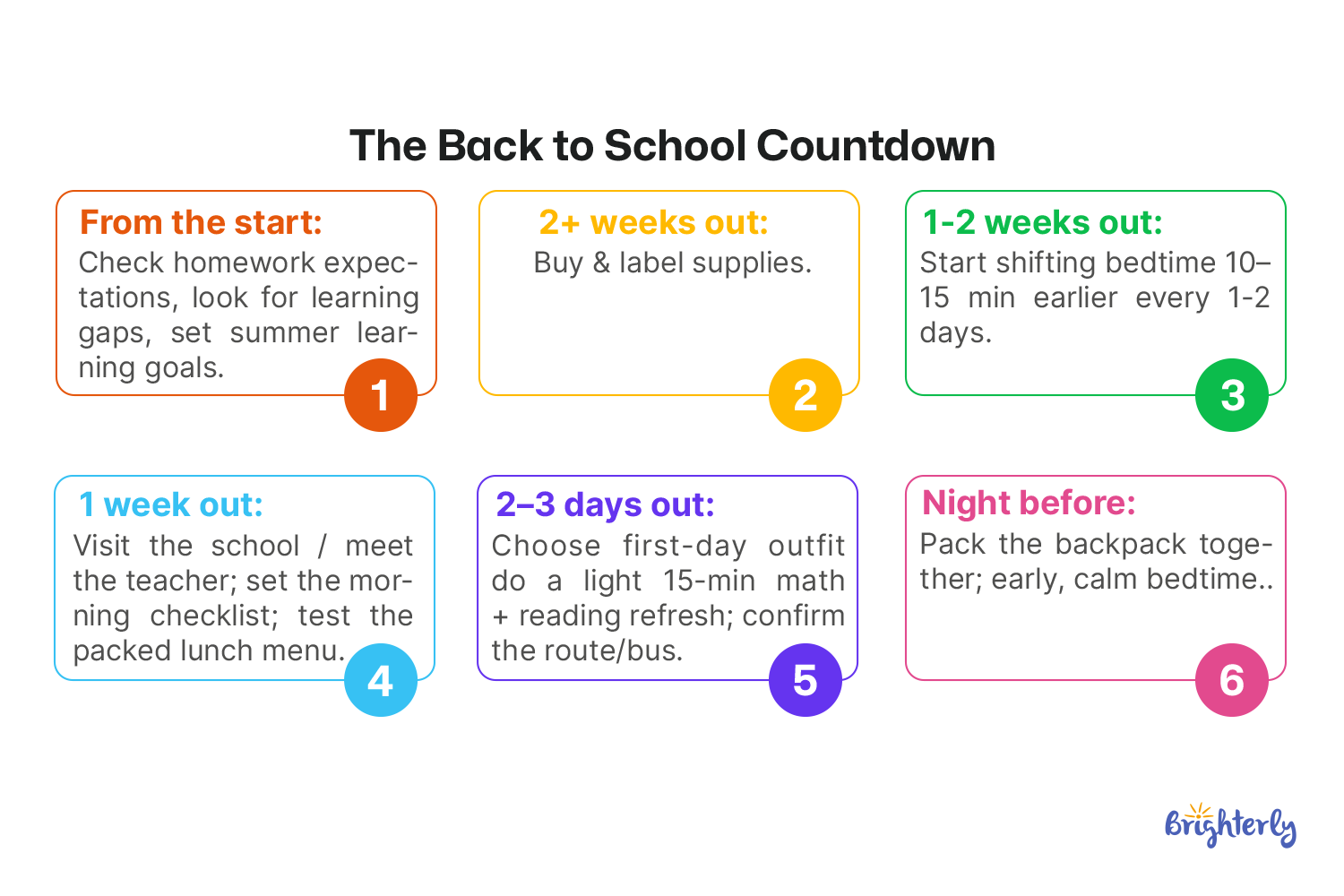
Key Points: It’s normal for both parents and kids to feel apprehensive about the start of a new school year, but a little preparation and the right back-to-school advice can make the transition much easier. Follow these simple back to school tips to help your kid transition back into the school semester as smoothly as possible. With school approaching, it’s important to make sure your kids are getting enough sleep. A 2020 research paper measuring the effect of sleep on academic performance found that consistent sleep patterns have a greater impact on GPA than duration. Tip: Rebuild the school night routine by shifting bedtimes 15 mins earlier every 1-2 days, starting 1-2 weeks before school starts. Create a morning routine that helps your family get out on time and stress-free. Wake everyone in good time and prepare clothes, homework, and extra equipment the night before. Tip: Use a visual chart to help younger kids remember what they need to do. Include things like brushing teeth/hair, packing your bag, and when to remember your sports kit. “My #1 tip is to establish a predictable and calming routine.” Chat with your kid about expectations and how you define ‘success’. Approach it collaboratively and allow your child to voice their own ideas, concerns, and expectations. Tip: Discuss things like attendance, homework routines, grades, screen use, rewards, and extra-curriculars so your child knows what’s expected of them from the start. “Parents can ask themselves what they expect from their child as they take time to consider their hopes for the coming school year.” Responsibility helps self-esteem, resilience, and problem-solving skills. It also lets kids learn from their own mistakes. Tip: Many families use chore charts to guide kids and offer rewards like stickers, allowances, or extra screen time. “The key is that the parent is not taking responsibility for anything that their child is developmentally capable of doing for themselves.” Make a school supplies checklist and shop early. Sorting supplies early gives you a chance to make sure nothing has been missed. Tip: Label kids’ supplies so if something gets lost, there’s a better chance it’s returned. Explore Brighterly Learning Experience Learn exactly how Brighterly helps students thrive through expert sessions, online tools, and proven feedback from thousands of satisfied parents Back to school preparation for students is not just about the right equipment. It’s about making sure they are mentally and emotionally prepared. For some families, that means reviewing last year’s learning and setting new goals, while for others it’s about relaxing and switching off. Only you know what works best for your kids.
See where your child’s reading stands
Check your kids' knowledge to spot gaps before the first bell rings. First day of school jitters are totally normal so make sure your kid knows it’s ok to be a bit worried. Follow these first day of school tips for parents to help ease your little ones’ nerves: If your child’s back-to-school anxiety is persistent or starts affecting everyday life, including their sleep or physical health, reach out to your child’s school or doctor for more advice and support. Back to school tips for students aren’t only about preparing them academically. Building healthy habits young will set them up for success throughout their lives. Here’s our top back to school health tips. Plan healthy lunch ideas to support your kids’ energy needs. Too many unhealthy foods can affect energy, concentration, and overall health. Tip: Prepare packed lunches the night before to prevent yourself from throwing unhealthy convenience foods into your lunch box. Sport is important for more than just physical health. Sports teach teamwork, resilience, and widen their friendship circle. Tip: There’s a sport for every kid. Your child might not like the popular sports, but keep encouraging them to try new things until they find the right activity for them. It’s 2026, so avoiding screen time completely probably isn’t an option. But establishing a screen schedule during the school days stops it from interfering with homework and sleep. Tip: Some families find that setting a timer for online activities helps kids build healthy boundaries. The summer slide is when kids lose some of the reading and math skills they gained during the school year. Without regular opportunities to practice, Dartmouth Children’s Health reports that kids in grades 3-5 can lose around 20% of reading gains and 27% of math gains over the long vacation. Here’s how to get ready for back to school: Brighterly offers free learning resources to help you support your child at home. If they need a bit of extra help, our 1:1 tutors are US-curriculum aligned and can create a personalized learning plan to fill any knowledge gaps.
Refresh math and reading before day one
Try a taster session and see how 1:1 tutoring rebuilds confidence. Top Tip #1 Top Tip #2 Top Tip #3 Back to school tips for elementary school students Set priorities: Let them know what their school-time responsibilities are. Give them space to fail: Let your kids take ownership, manage their time, and be efficient. Create a distraction-free environment: Prepare a quiet space for homework. Back to school tips for middle school students Give them responsibility: Age-appropriate responsibilities like walking to school alone foster independence. Set SMART goals: Set short, medium, and long-term goals together. Encourage seeing setbacks as opportunities, not failure. Let them choose: Give your kid input into their weekly schedule, including extracurricular activities and free time planning. Back to school tips for high school students Teach relaxation: Encourage mindfulness, meditation, and other stress management techniques to support emotional health. Protect your relationship: Teens need an adult they trust and can go to. Prioritize your relationship with your teen. Encourage sleep: Sleep is often overlooked in favor of socializing, studying, or sports, but it’s vital for learning and overall well-being. How to avoid: Set out expectations and a realistic plan at the start of the summer. Watch for signs that your child is struggling in school and may need extra support, and space learning out into small, manageable blocks. How to avoid: Extracurriculars are important, but when the school year starts, so does downtime. Choose one or two activities your child wants to do. How to avoid: Sit down and talk about what you and your child expect from the coming months. Make it collaborative and come up with some realistic goals together. Heading back to school can be nerve-racking for everyone, but by following a few back to school tips and tricks, you can make the transition from summer holiday to school semester smooth for the whole family. Kids should enter the new year feeling prepared, both academically and emotionally. Using a reading or math tutor for homework help or to plug gaps can set your child up for a successful year. Realistically, kids need a week or two to decompress before they’re ready to tackle schoolwork. Start other back to school preparation, like buying new equipment at least 2 weeks before the end of the holidays, and shift into term-time sleep and health routines 1-2 weeks before school starts. You can help younger kids make friends by arranging play dates or signing them up for local clubs. Encourage older kids to reach out to friends over the summer and arrange things. Some children like a wide variety of friends, whereas others prefer a smaller group. Tearful first-day drop-offs can be heartbreaking, but it helps to remember that it’s very common and usually doesn’t last. Support your child by: According to the Cleveland Clinic, here’s how much sleep your child needs: It’s normal for children to say they don’t want to go to school at some point. However, if your child’s feelings persist or they refuse to go, then talk to the school about any issues and ask for extra support. You can also speak to your kids’ healthcare provider for further help. You can use at-home resources like worksheets to support school learning or try online math lessons. You can also try a reading and writing tutor who can assess your child’s level, their strengths, and areas to work on. Our tutors design a personalized plan to help your child reach their goals. For those who feel stuck with Khan Academy, self-study mode, or notice a dip in motivation when the learning style doesn’t match their kid’s energy, here are the top 13 Khan Academy alternatives. You’ll find out their user-reported strengths and drawbacks, as well as features that Khan Academy lacks. Disclaimer: This list of top 13 […] Aug 29, 2024 The 20 best online learning resources in 2026 have diverse formats that range from 1:1, real-time tutoring to prerecorded video lessons and interactive games. This guide presents the features, cost, and pros and cons of these platforms so that you can select the best one for your child, according to their age, favorite learning style, […] Aug 29, 2024
Back to School Tips for Parents
Start the School Sleep Schedule Early
Rebuild School Routines and Morning Checklists


Set Reasonable Expectations Together

Hand Kids Age-Appropriate Responsibilities
Organize School Supplies and Backpacks
What Does Getting Ready for Back to School Really Mean?


How to Ease First-Day Nerves and Back to School Anxiety
When Back to School Jitters Might Be Something More
Healthy Habits for a Strong School Year
Nutrition and Packed Lunches
Physical Activity and Movement
Screen Time Limits on School Nights
Refresh Skills Before Day One: Beating the Summer Slide
Age-Specific Back to School Tips
Back to School Tips for Kids to Use Themselves
Common Back to School Mistakes to Avoid
Conclusion
Frequently Asked Questions
When Should Parents Start Preparing for the New School Year?
How Can I Help My Child Make New Friends at School?
How Can Parents Handle a Tearful First-Day Drop-Off?
How Much Sleep Does My Child Actually Need?
What If My Child Says They Don’t Want to Go to School?
How Can I Support My Child’s Learning at Home During the Year?



Math & reading from 1st to 12th grade
Looking for homework support for your child?

Choose kid's grade

Math & Reading for Grades 1–12
Build real confidence for your child with a Brighterly math or reading tutor.