30+ Fun Reading Activities That Make Reading Fun for Kids
reviewed by Laila A. Lico
Updated on November 18, 2026
Key Points:
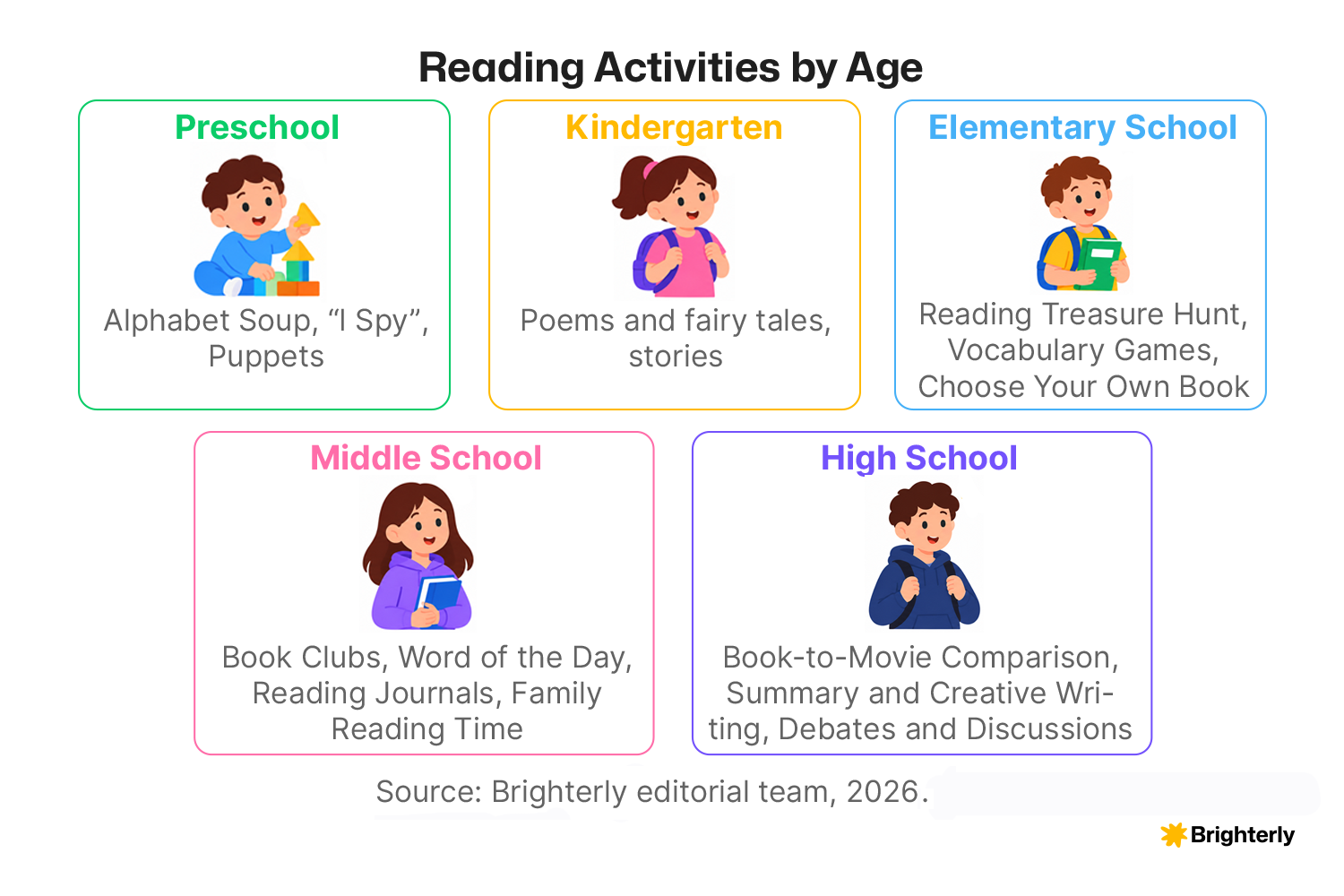
Reading activities for kids are games and hands-on tasks that can help you make practicing reading enjoyable for your child instead of feeling like a chore. Read on to find 30 fun reading activities organized by age, from preschool through high school, as well as ideas for struggling readers, so you can finally make reading fun at home.
What Are Reading Activities?
Reading activities are tasks and games that help kids practice and improve their reading skills at home or in class in enjoyable ways. They focus on building phonics and phonemic awareness while enhancing comprehension or vocabulary.
Depending on the reading level, they include different activities, from charades with alphabet letters to creating stories. The importance of fun reading activities, with interaction and collaboration at the center, lies in keeping students motivated and confident and making knowledge stick.
If reading activities for kids are fun, they can:
- Improve their confidence
- Develop reading habits
- Enhance word recognition and reading comprehension
Explore Brighterly Learning Experience
Learn exactly how Brighterly helps students thrive through expert sessions, online tools, and proven feedback from thousands of satisfied parents
Reading Activities for Elementary Students
Fun reading activities for elementary students work best when they strengthen phonics, vocabulary, and comprehension through play. At this stage, games can help you lay the foundation for reading and achieve steady progress in a way that feels fun.
Reading Worksheets
Reading worksheets doesn’t sound like a fun activity, yet they can be. With the right mix of tasks, they are great reading activities for Grade 1. Their main benefit is that they provide structure for the practice and offer targeted questions that aim to focus on the reading components.
Worksheets are effective reading activities for students in elementary school because they reinforce what is learned in class and don’t require significant participation from parents.
What does a kid need to make it work? A set of prepared questions in the form of a fun reading activities PDF, a pen, and a bit of guidance from a parent.
Worksheets are an integral part of the 1:1 reading lessons that the Brighterly math and reading platform provides. Reading tutors can develop a customized reading program for your kid based on their needs and pace.
There, reading worksheets are important parts of pre-lesson and after-lesson activities backed by the tutor’s guidance and interactive tasks that cover phonics and comprehension.
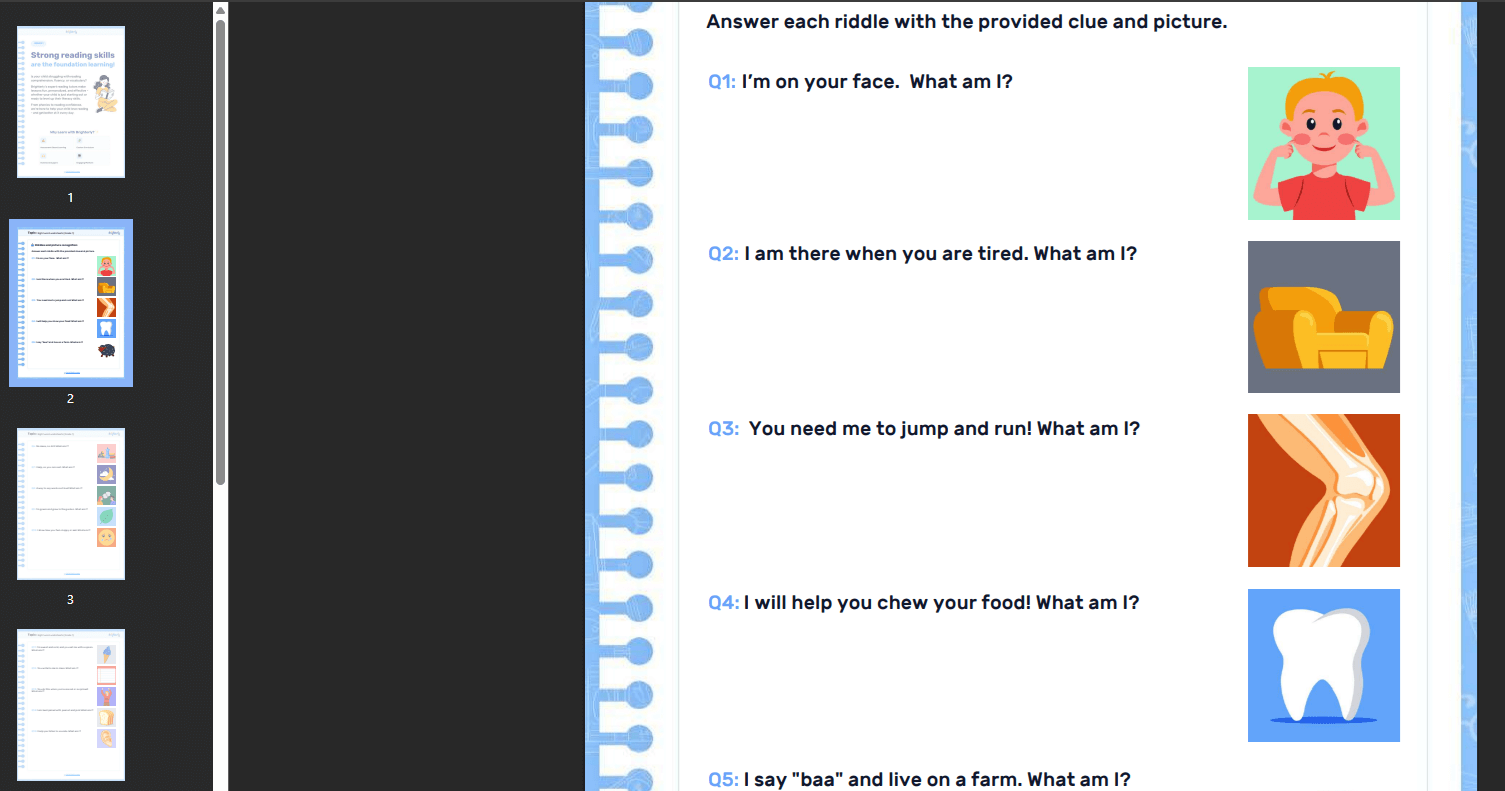
With the Brighterly worksheets, your kid can get the best reading activities that match their level and boost confidence.
Build a stronger reader with 1:1 reading classes!
Help your child develop lasting reading skills with step-by-step professional guidance. 

Reading Treasure Hunt
What about a more fun reading activity to try at home? A reading treasure hunt. This variation of a well-known game turns practice into an adventure.
How does it work?
- A parent or a teacher hides written clues around the classroom or house.
- A kid finds it and reads each clue to progress to the next one.
- After several clues, they find a final one leading to a treasure or prize.
For a prize, think of a tiny thing that a kid would love to get. Such a reading activity would boost kids’ understanding of words.
Why it works: When they win rewards for decoding clues and recognizing words, reading starts to have an immediate, motivating purpose for your child.
Vocabulary Games
Vocabulary games do encourage kids to learn new words. They help naturally absorb meanings and improve semantic understanding. You can choose from a variety of reading activities and games that make vocabulary learning fun.
Here are some of the most popular ones:
- Charades to guess words, like Pictionary.
- Guess the word
- Word of the day challenge.
Note: Looking for more vocabulary and reading activities for students? Check our article on the best vocabulary games for kids.
Word Games
Word games are the answer to how to improve vocabulary and support reading practice. Yet, they are different from vocabulary games. How? First of all, they aim to strengthen spelling, phonics, and recognition.
In particular, you can contribute to how kids notice letter patterns with such at-home reading activities:
- Crosswords based on simple stories or word searches.
- Games like Hangman.
- Scrabble and Boggle Junior.
Story Sequencing Cards
Another excellent reading activity for kids involves story sequencing cards. How does it affect reading skills? Sequencing cards enhance reading comprehension. With them, children get an order and sense of the story events.
For them to work, first read a story with a kid. Next, give them cards with story events and ask them to arrange the cards in the correct order.
That way, you strengthen their understanding of cause and effect and support story structure. Importantly, you can encourage retelling with questions and hints with specific words from a text.
Why it works: Ordering events can build better comprehension and help understand story structure, which are core skills for every reader.
Note: If your kids are in early elementary school, you may like our article How to help my second grader with reading.
Let Them Choose Their Book
Let your child pick what they read. When they get to choose a book that genuinely interests them, it can help them build autonomy and curiosity. Additionally, when they feel in charge of their reading process and progress, it’s far more likely they’ll stick with reading and build a lasting habit out of it.
Create a Cozy Reading Space
The environment plays an important role in making reading fun. Set up a special nook with soft pillows, warm lighting, and their favorite books. A comfortable corner like this can turn reading into a personal retreat and something they choose to do, as well as help your kid concentrate.
Fun Reading Activities for Middle School
If you compare levels, middle school students often read independently. Therefore, they need interactive middle school reading activities to deepen their understanding and enjoy reading more. In this regard, the fun reading activities for kids would focus on discussion, critical thinking, and creative parts, turning assignments into experiences.
Book Clubs
A book club is possibly one of the most fun reading activities for middle school. It has the potential to turn reading into a social activity. For it to work, middle schoolers should read the same book and then meet in a small group to chat about it. Yet, kids can do it at home with family members, too. Just pick a book to read and discuss together.
With book clubs as reading enrichment activities, students can discuss characters, plot twists, and opinions. Hearing and sharing thoughts would improve understanding, critical thinking, and vocabulary.
Why it works: Talking about books turns passive reading into an active process, when your kid thinks more deeply and understands the book in more detail. It’s also a great way to make reading fun.
Note: Before selecting books for a club, resort to reading tests to assess the child’s current comprehension and reading level.
Word of the Day
Another fun reading activity to consider is the word-of-the-day practice. Depending on the level of your kid, you can use it differently. Usually, parents introduce a new word each day, let’s say during breakfast or dinner, either from a news story or an assignment.
Next, challenge learners to use it in a sentence or conversation. A good idea is to turn it into a competition for who uses the word the best or in the funniest way.
Reading Journals
Reading activities for students don’t always require other people to be fun. Keeping a reading journal can be engaging if a student finds reflection interesting. So, you can encourage kids to make a reading journal and write entries upon finishing each chapter or a story. A summary, reaction, or even a question would help them jot down their thoughts and connect words to them.
Why it works: When your kid writes about what they’ve read, they once again remember what they’ve read and think about it, turning reading into an active process again.
Literature Trivia Quiz
When a student is in a higher grade, you can turn a review session into a game with a literature trivia quiz. After reading stories or novels, come up with questions about their characters, events, and details.
If it’s a book club, you can split into teams and set up a competition. If not, you can make a trivia with interesting prizes. Such reading activities as quizzes would help recall what they read and support comprehension.
Podcast Reading Reflection
Instead of journaling, a kid can create a podcast to share their reading reflections. As a parent or a teacher, you can let students record short podcasts discussing favorite scenes, lessons, or ideas. You also ask specific questions so that they develop their thought using specific concepts, terms, or words. Podcast-related reading enrichment activities are modern and fun for students.
Family Reading Time
Reading together is one of the best family traditions you can have. Set aside regular time when everyone reads together. This can help build a sense of community and create a positive association with reading as something you do together.
Switch Book Formats / Themed Reading
One of the ways how to make reading fun is by mixing it up. Middle schoolers crave variety, so make sure they have various formats to choose from. Non-fiction, comics, or graphic novels each offer fresh perspectives and vocabulary. Better yet, spot the themes and different genres your child enjoys, and have a themed reading schedule around them to keep them interested.
Turn everyday reading into a fun adventure
Help your child enjoy reading with playful lessons that match their interests. 
Reading Activities for High School
High school learners are capable readers. For them, reading enrichment activities should tap into problem-solving, higher-level thinking, and real-world connections. So, how can you bring engagement and fun into reading?
Summary and Creative Writing
One of the engaging reading activities for high school students is creative writing. Importantly, you can combine it with writing a summary or abstract.
- First, upon finishing a chapter or article, ask them to summarize it. You can add conditions, like “make it as short as a social media post” or “make it clear for kindergarten learners”.
- Next, ask them to add new events, characters, or rewrite the story’s ending.
This combination can be a basis for enrichment activities for gifted students interested in storytelling.
Note: If you want the students to get through books faster, here’s our guide on how to increase reading speed.
Book-to-Movie Comparison
An engaging reading strategy for high school is to compare a book to its movie. When they finish a novel, watch the film version together. Then discuss the following:
- What was different in the movie?
- Why did the directors decide to change things?
- Which version was better?
As comparison encourages critical thinking and shows depth, it may be one of the activities for kids to understand the importance of reading.
Debates and Discussions
Classroom or at-home debates and discussions transform reading into active learning via practicing listening and forming arguments.
So, pose an open-ended question or dilemma from the book. Make children debate their stances using evidence from the text. Also, ask questions to direct the discussion so that they can argue their points. These activities can prepare them for analytical tasks often found in reading activities for high school PDF collections.
Creative Reading Projects
Creative projects will let your late teens share their take on the book through something more than just words. They can draw a scene, design an alternative cover, or do something entirely else. All of these can help them understand and remember what they’ve read better.
You can try these specific spins:
- a character costume day, where your child (and maybe also their friends) dress as a favorite character and explain their choice
- a book-trailer challenge, where they film a short video trailer for a story they’ve read
- an alternate-ending contest, where everyone (in your family or the bookclub) writes a new ending and votes on the best
These will make your teen think hard about themes, characters, and plot.
Book Soundtrack Project
A popular example of engaging reading activities for high schoolers is a fun soundtrack project based on a book. Yes, you got it right; it requires making a list of songs for the book
So, ask children to choose songs that match a story’s themes, mood, or characters, and then explain their choice via presentation. Such a project helps students interpret stories emotionally.
Make Reading Social
Teenagers are online, so one way to make activities for reading fun is to move them online too. Social platforms can turn reading into something your child shares with others. Encourage them to review books on TikTok, join reading challenges on Instagram, or take part in a virtual book club on Discord. Connecting reading to social elements will keep your older child engaged and help them build a community of fellow readers, which will motivate them even further.
Fun Reading Activities for Struggling Readers
When reading is a struggle, your first goal should be lowering pressure on your child and helping them regain their confidence. Here are some fun reading intervention activities that can make reading feel possible again.
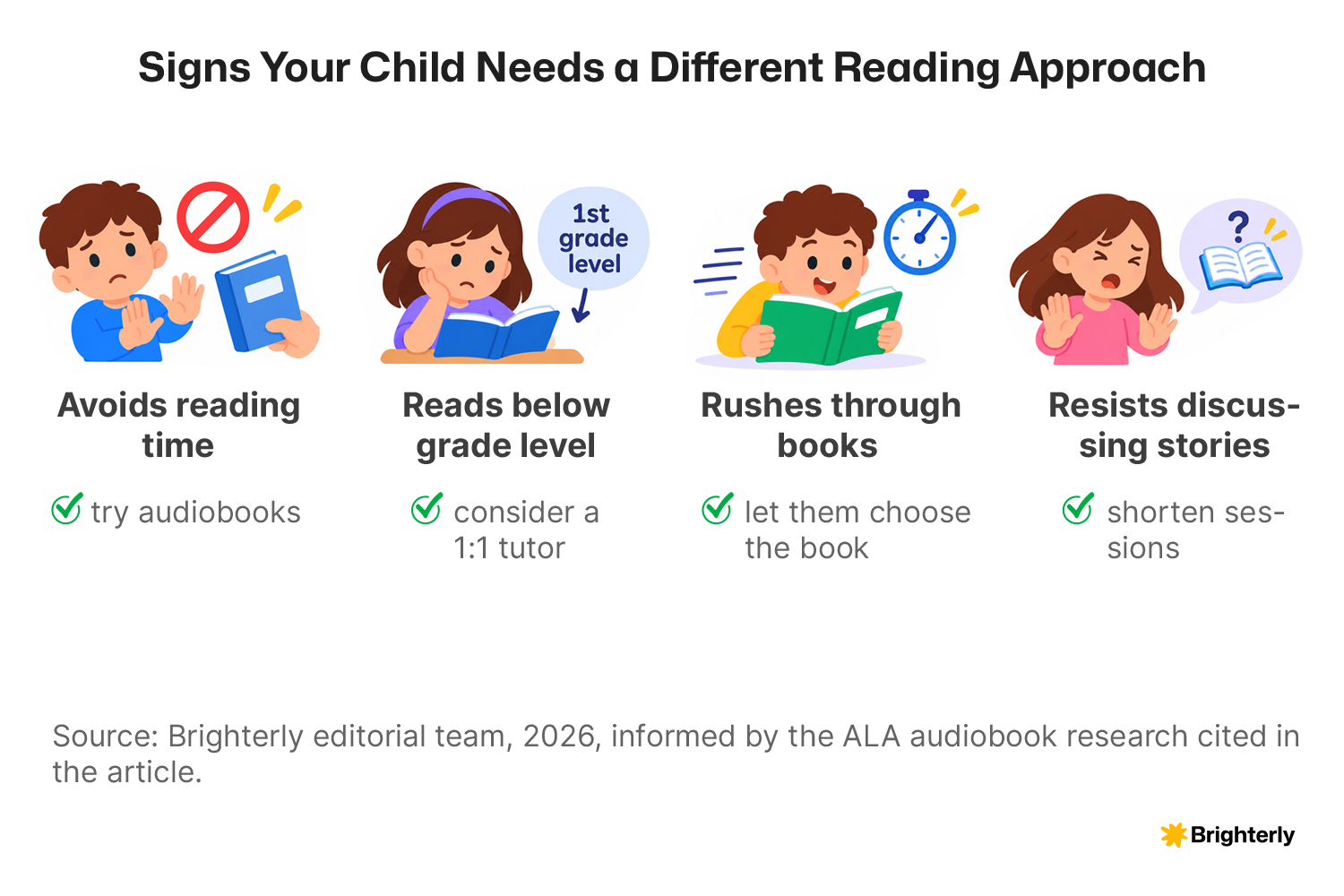
Try Audiobooks
Audiobooks introduce reading in a lower-pressure format your kid can listen to anywhere. A 2022 review in Educational Psychology Review found that pairing audiobooks with the printed text improves comprehension more than print alone for struggling readers, by helping them engage with even complex stories they still can’t decode themselves, and what’s more important, enjoy them. You can even pair the audio with the print book, so your kid develops reading fluency by reading along as well. This is a great place to start if you are looking for easy reading activities.
Visit the Library Together
Another reading activity for kids struggling with reading is going to the library. Turn a library trip into a treasure hunt for the perfect book. Let your child browse at their own pace; don’t rush them. They will discover new genres, authors, and formats with no pressure. A librarian can also help them to find the titles they finally click with.
Consider a 1:1 Reading Tutor
When you are looking at how to make reading fun for struggling readers, there are many activities that can help. However, sometimes the biggest help is a patient professional. A reading tutor can meet your little reader exactly where they are, adapt each lesson to their pace, and help them progress in a way that feels genuinely fun rather than frustrating. Brighterly’s online reading tutors do just that during 1:1 lessons built around your child’s level.
Reading Challenges for Kids
Many of the activities above work even better as a reading challenge: a goal your child works toward over a few weeks, with a clear finish line. Here are five challenges to try at home:
- Genre challenge (grades 3–9). Make a genre checklist, like mystery, fantasy, poetry, historical fiction, and nonfiction, and read one book or story from each. It helps kids who always pick the same kind of book discover new favorites.
- Read around the world (grades 2–8). Each book or story should come from or be set in a different country. Mark every new place on a map to make the journey visible.
- Family reading challenge (grades 1–8). Read the same book as your child, set a shared goal like five chapters a week, and talk about it together on the weekend.
- Reading bingo (all ages). Fill a bingo card with prompts like “read a mystery,” “read outside,” or “guess the ending before the last chapter.” A full row earns a small reward.
- 30-day reading streak (all ages). Read every day for 30 days, even for just 10 minutes, and mark each day on a calendar.
For a more structured challenge, give your child one grade-level reading worksheet a week, or turn the reading treasure hunt (#2) into a timed race. In summer, many libraries and bookstores run their own reading challenges with prizes. You can find them in our list of summer reading programs.
How to Make Reading Fun and Keep Kids Motivated
Activities and challenges work best when reading itself feels good. The habits below help every activity in this list stick, and they matter more than ever: according to the 2025 Nation’s Report Card, only 37% of 9-year-olds and 14% of 13-year-olds read for fun almost every day.
Why Kids Lose Reading Motivation
Kids rarely avoid books out of laziness. More often, one of these is behind it:
- Reading has become too hard. New school expectations or early skill gaps make every page feel like work. Practicing reading comprehension strategies together can help close the gap.
- Fear of failure. A child who says “I’m bad at reading” starts avoiding it to protect themselves.
- Reading feels like a test. Constant correction and assigned titles turn reading into a performance instead of something to enjoy.
Tips to Make Reading Fun
- Let them choose. Books about dinosaurs, sports, or a favorite cartoon all count if they get your child reading. Research on teen readers links choosing what to read and reading with others to more reading and stronger engagement.
- Start small. Five to ten minutes a day is enough. Celebrate every finished page or chapter.
- Don’t correct every word. Ask about the story and the characters instead of checking accuracy.
- Make it social. Read side by side, try the family reading challenge above, or start a book club (#16) at home.
- Create a cozy reading spot. A corner with pillows, good light, and favorite books makes reading feel like a treat.
- Switch formats. Comics, graphic novels, magazines, and audiobooks can win over reluctant readers. A School Library Research study found positive effects for struggling readers who joined a library audiobook club.
- Visit the library together. Let your child explore genres and authors at their own pace.
Conclusion
So, here are 30 reading activities to make reading fun and engaging for kids, whether in preschool or high school. From alphabet bingo to creative projects, these strategies would strengthen vocabulary, comprehension, and confidence.
If reading is still a struggle or your child needs a motivation boost, book free reading lesson with Brighterly to see how engaging and fun reading lessons can be.
Frequently Asked Questions
How Long Should a Fun Reading Activity Take?
Keep the reading activities short and position. Limit them to about 10-20 minutes for younger kids and up to 30 minutes for older students. It’s better to stop while your child is still enjoying the activity instead of pushing until they lose interest.
What Age Can Kids Start Doing Reading Activities?
You can start reading activities for kids as early as toddlerhood. Preschool and kindergarten activities focus on listening, rhymes, and letter play long before your child can read independently. These activities build the language foundation that makes later reading easier.
How Often Should We Do Reading Activities at Home?
A little and often works best. A few short sessions a week or a few minutes per day are better than one or two long sessions per week. When your child is just learning to read, consistency matters far more than the length, while mixing the activities will help to keep things fresh.
Do Reading Activities Replace Daily Reading Practice?
No. Activities make practice more enjoyable and help students to strengthen their reading skills, but they don’t replace reading. Think of them as supplementary activities that can work alongside regular reading, but not instead of it. Aim to keep the daily reading as the base, and use fun reading activities to improve motivation.
What’s The Difference Between a Reading Activity And a Reading Intervention?
A reading activity is a fun, general way to practice and enjoy reading. A reading intervention is a more structured, targeted plan, which can often by guided by a tutor or specialist, and the goal is to address a specific skill gap. Reading activities suit every child, while reading interventions especially help the kids who are struggling.
Are There Reading Activities That Need Zero Prep Or Materials?
Yes. “I Spy,” silly-voices reading, rhyming games, word of the day, and read-alouds need nothing but you and your child. These activities are ideal for car rides, waiting rooms, or a quick reading session before bed.

Phonics activities for kids teach them how letters and sounds connect, and transform reading time playfully with fun stories and effectively with worksheets. Save these exercises to teach kids phonics (organized by age and format) and particular methods of doing it at home, and find out how to make phonics practice feel like play. Phonics […]

Oct 23, 2025

Picking the right learning platform for your child can be difficult. And since you have so many options available to you, it’s important that you have the most up-to-date info on what each platform actually offers. I’m an expert tutor, and today I’m going to walk you through which platform is perfect for you — […]

Oct 23, 2025
Math & reading from 1st to 12th grade
Looking for homework support for your child?

Choose kid's grade

Math & Reading for Grades 1–12
Build real confidence for your child with a Brighterly math or reading tutor.